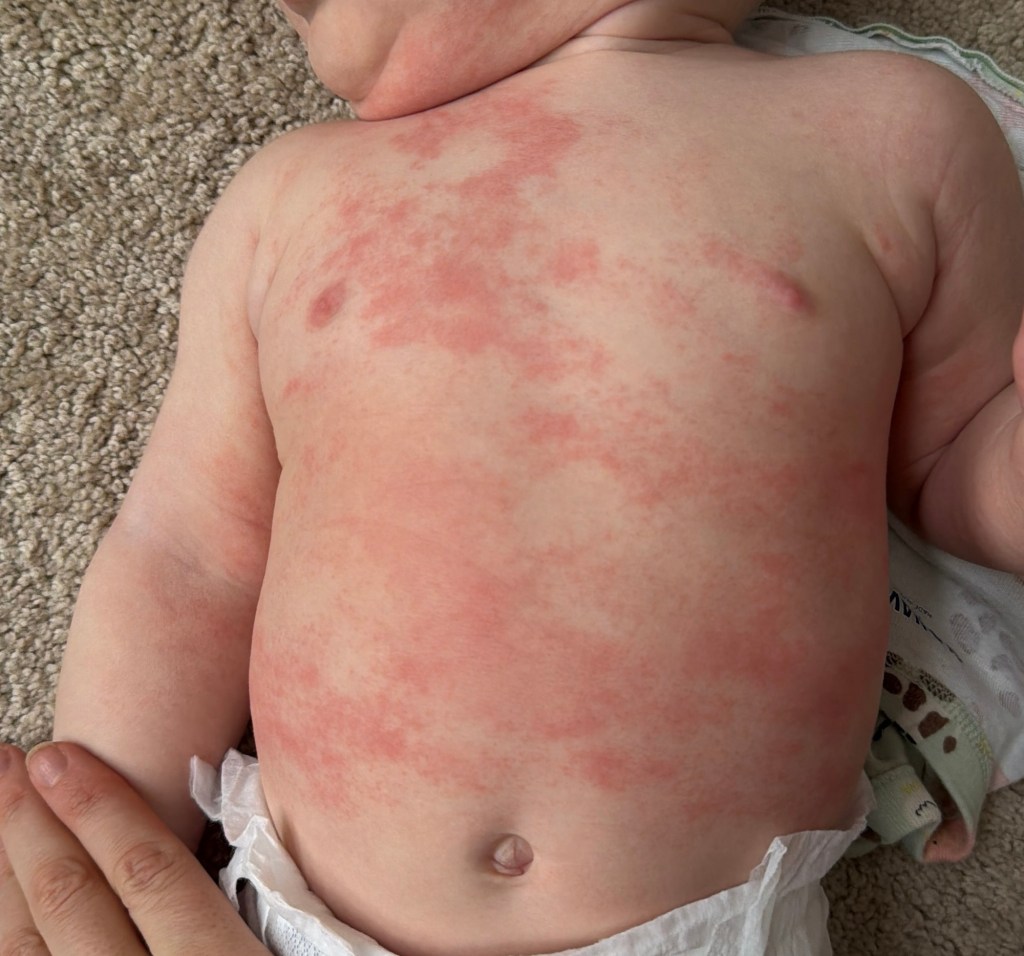
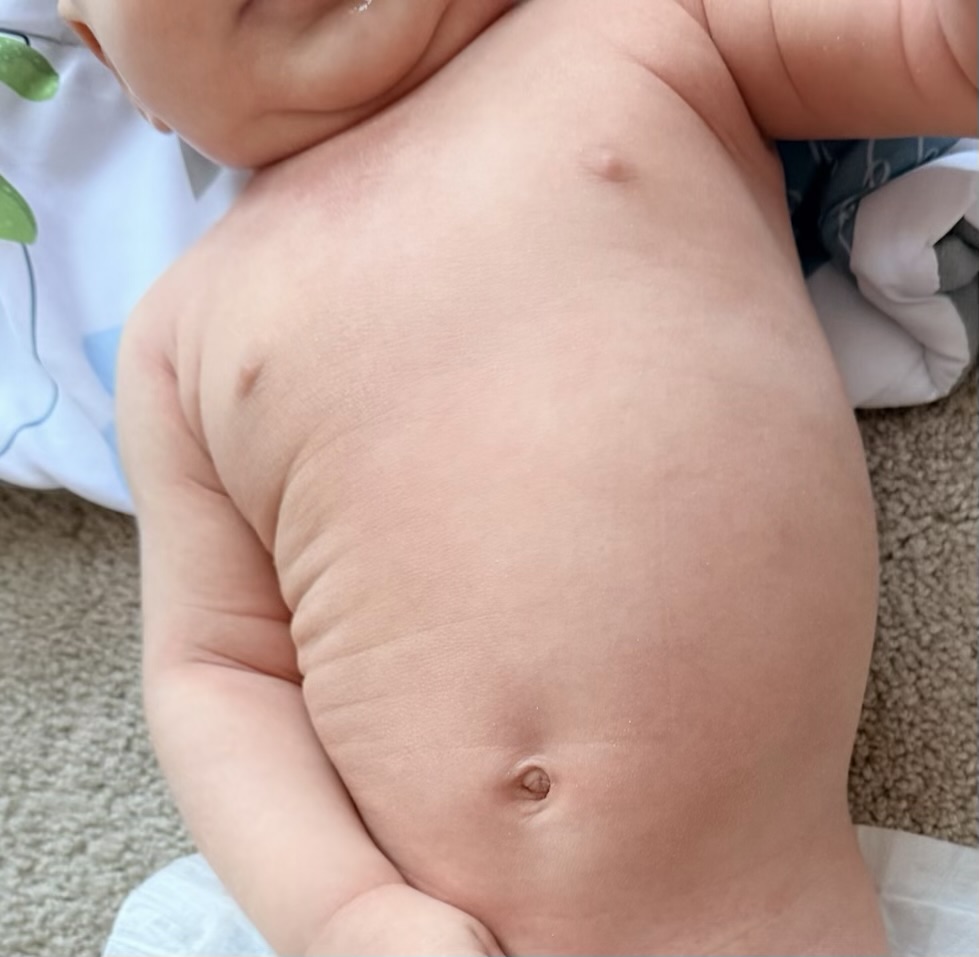
BLUF: The probiotic approach I used for both me and my baby when dealing with eczema and candida.
Why probiotics mattered more than antifungals for us
When we were in the thick of eczema flares and suspected candida patterns, we initially relied on topical antifungals and barrier creams.
They helped — temporarily.
But research continues to show that skin conditions like eczema are often linked to gut microbiome imbalance and immune regulation. Candida overgrowth, when it occurs, is typically a symptom of disrupted microbial balance — not just a surface-level issue.
Instead of focusing only on eliminating yeast, I shifted toward restoring balance.
Probiotics don’t “kill” candida the way antifungals do. What they can do — according to available research — is support microbial diversity, immune modulation, and competitive inhibition (meaning beneficial organisms crowd out opportunistic ones).
For us, that shift from “attack mode” to “rebalance mode” made the bigger long-term difference.
Antifungals treated flares.
Probiotics helped reduce the pattern.
The broad-spectrum probiotic I chose (mom)
For myself, I used Ther-Biotic Complete as my foundational probiotic.
I chose a broad-spectrum option because studies suggest that strain diversity may support more resilient gut ecosystems. Multi-strain formulas containing Lactobacillus and Bifidobacterium species are commonly studied for:
- Gut barrier support
- Immune system modulation
- Skin-related inflammatory conditions
As a breastfeeding mom, I also considered that maternal microbiome composition influences breast milk bacteria and early infant colonization.
Ther-Biotic Complete offered:
- Multiple researched strains
- A clinically relevant CFU count
- A clean ingredient profile
This became my baseline daily support rather than something I cycled on and off.
The yeast-competitive probiotic I added (mom)
In addition to a bacterial probiotic, I added Pure Encapsulations Saccharomyces boulardii.
Saccharomyces boulardii is a beneficial yeast, not a bacteria. It has been studied for its role in:
- Supporting intestinal microbial balance
- Reducing pathogen adhesion
- Assisting after antibiotic use
One reason it’s often used in yeast-support protocols is that it competes with opportunistic organisms without permanently colonizing the gut.
I liked that it worked differently than traditional probiotics.
Within about a week of adding it, I personally noticed two things shift:
- My persistent gut bloat decreased
- The scalp itchiness I had been dealing with calmed down significantly
Scalp irritation can have many causes, but because yeast naturally lives on the skin (including the scalp), I found it interesting that this symptom improved alongside digestive changes. It wasn’t proof of anything — but the timing felt meaningful to me.
For my baby, I used half of one capsule mixed into a bottle when appropriate and tolerated.
The combination of:
- Broad-spectrum bacteria
- Plus a yeast-competitive strain
felt like a more complete approach to restoring balance rather than just suppressing symptoms.
The infant probiotic I used for my baby
For my baby, I chose Ther-Biotic Baby.
Infant microbiomes are naturally dominated by Bifidobacterium species, especially in breastfed babies. These strains are associated in research with:
- Healthy digestion
- Immune development
- Reduced inflammatory responses
Rather than giving an adult-style probiotic in a smaller dose, I preferred a formula specifically designed for infants.
Ther-Biotic Baby focuses heavily on Bifidobacterium strains and avoids unnecessary additives, which aligned with what I was looking for.
I mixed one serving into a bottle daily and prioritized consistency over high dosing.
How I adjusted probiotics for a baby’s developing gut
Infant gut ecosystems are still forming — especially in the first year of life.
Research shows that early microbial exposure influences immune development long-term, which is why I approached supplementation cautiously.
I focused on:
- Starting slowly
- Watching stool patterns
- Monitoring skin and gas changes
- Adjusting gradually
Temporary shifts (like mild gassiness or stool changes) can happen as the microbiome adjusts. If I saw anything that felt off, I reduced the dose and increased more slowly.
The goal wasn’t to overwhelm the gut — it was to gently support balance.
What improved after adding probiotics
Nothing changed overnight.
But over several weeks, I started noticing steady shifts — both for me and for my baby.
For my baby, I noticed:
- His stool smelled less “fermented.” Before probiotics, it had a strong sourdough-starter type smell.
- The noticeably sweet smell on his breath went away.
- His skin rashes didn’t disappear, but they became more manageable and less intense during flares.
For me, digestion felt more stable overall.
Now — I want to be clear — we are still very much in the “rebuild” phase.
I was on antibiotics during pregnancy, which can significantly disrupt the maternal microbiome. Rebuilding gut balance after antibiotics (especially during pregnancy and postpartum) takes time. The microbiome doesn’t shift overnight — and I didn’t expect it to.
The biggest improvement wasn’t perfection.
It was that things felt less reactive and more regulated.
We’re still supporting the gut intentionally, but the constant flare cycle we were stuck in has eased — and that alone has felt like progress.
Important notes for breastfeeding moms
A few important reminders:
- Always talk to your pediatrician before starting supplements for your baby.
- Not all eczema is microbiome-driven.
- Not all rashes are yeast-related. Individual responses to probiotics vary.
While there is growing research around the gut-skin axis and microbiome support, probiotics are supportive tools — not guaranteed cures.
I’m not a practitioner. I’m a mom who researched carefully, chose high-quality products, and paid close attention to patterns.
If you’re breastfeeding, your gut health matters too. Supporting yourself can indirectly support your baby — but always with medical guidance.
Shop my probiotic regimen
As an Amazon Associate, I earn from qualifying purchases.
Ther-Biotic Complete – Daily Microbiome Support
Find it on Amazon 👇🏼
Pure Encapsulations Saccharomyces Boulardii – Yeast Competing Probiotic
Find it on Amazon 👇🏼
Ther-Biotic Baby – Gentle Probiotic Support
Find it on Amazon 👇🏼
Jump to our skin regimen!
👉🏻 Read about our topical journey here!
 The BLUF Collective
Leave a comment